Print on Demand vs Bulk Orders: Why Your Imagination Beats the Warehouse
For decades, custom clothing started with a guess: how many shirts, which sizes, which colours. Print on demand flips that. Nothing is made until someone imagines it and orders it, so the warehouse disappears and your idea becomes the starting point.
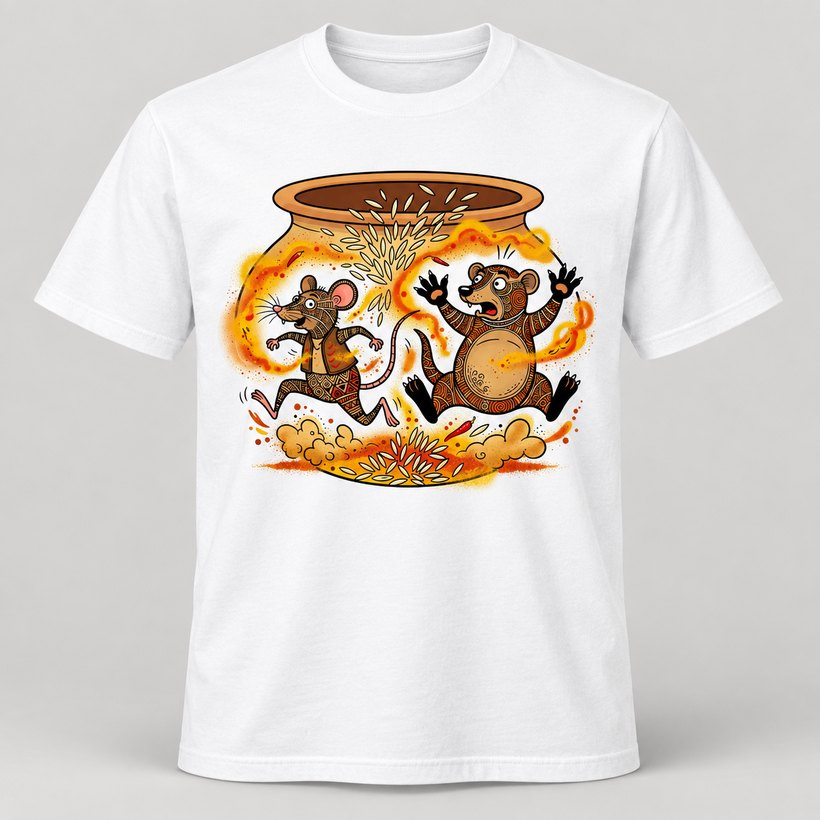
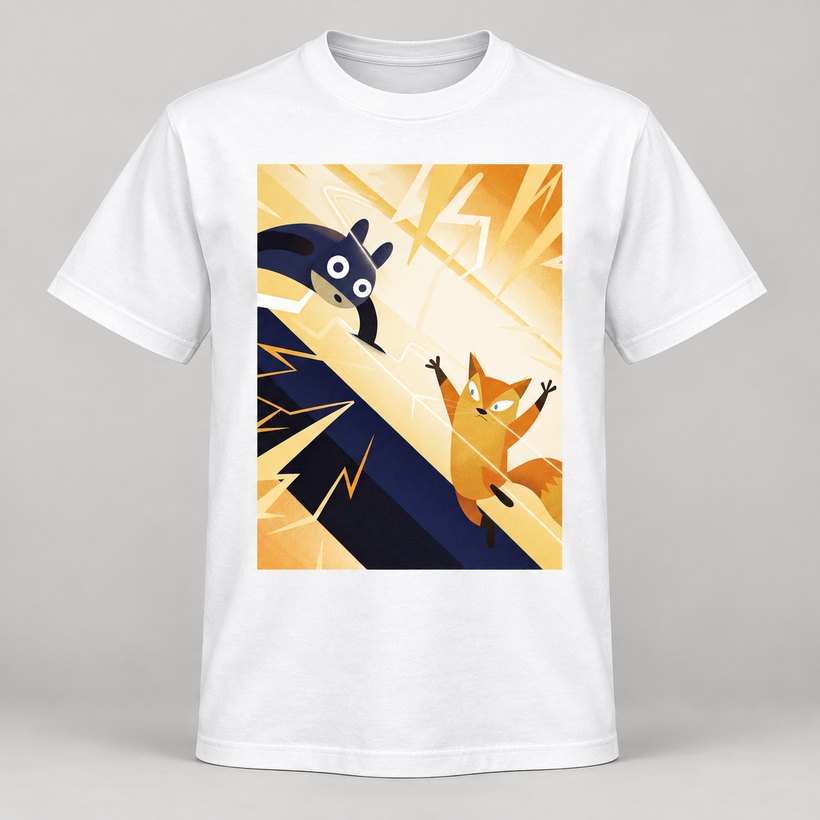
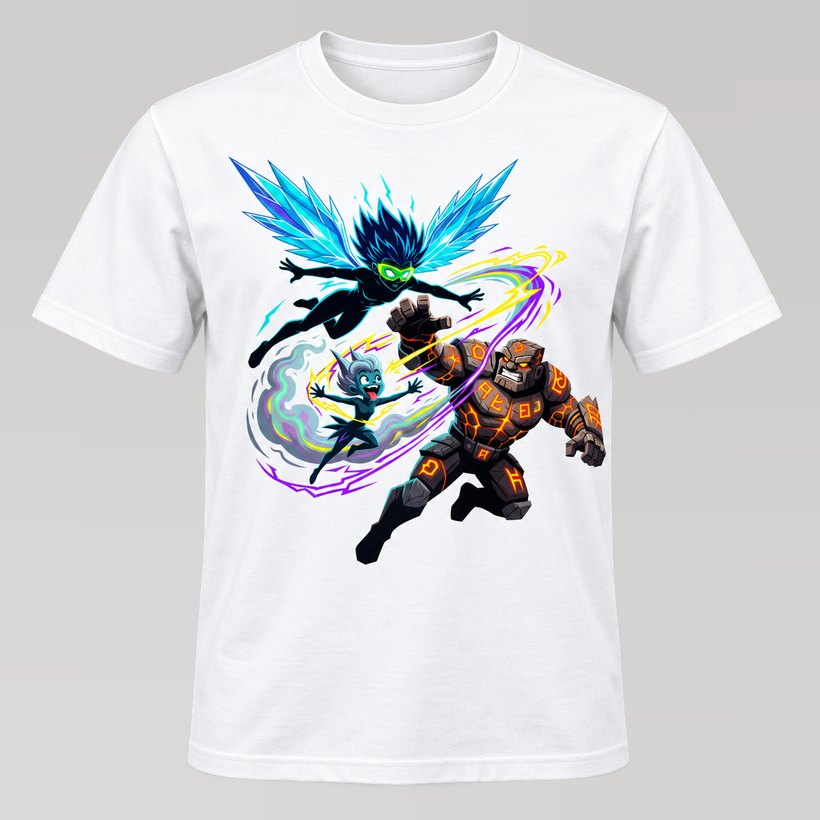
Print on demand makes each item only after it is ordered, while bulk ordering prints large batches in advance and stores them. On demand means no minimum order, no unsold stock and a unique design on every piece. Bulk only wins when you need hundreds of identical items at the lowest unit cost.
Key takeaways
- Bulk printing asks you to predict demand, sizes and colours before anyone buys. Print on demand asks only for an idea.
- Local print shops often need 25 to 50 pieces before they set up a job. On-demand printing starts at one.
- Estimates suggest roughly 10% to 30% of clothing produced is never sold. Made to order apparel avoids making that surplus at all.
- With AI design, every piece can carry a different design at the same flat price.
- Bulk still makes sense for hundreds of identical tees. For everything personal, on demand fits better.
How does the bulk ordering model work?
Traditional apparel, from global fashion brands down to the neighbourhood print shop, runs on the same loop. Someone forecasts what people will want, prints a large run to keep the unit cost low, ships it to a warehouse or stockroom and then tries to sell all of it. Whatever does not sell is discounted, and whatever still does not sell is written off.
For a customer who just wants a custom t-shirt, that loop shows up as a minimum order quantity. Screen printing needs a screen made for every colour in the design, so a local shop typically asks for 25 to 50 pieces before the setup is worth it. If you only want four shirts for a birthday, you either pay for forty or you do not get them.
Bulk t-shirt printing also freezes your choices early. The design, the colours and the size split are all fixed before a single shirt is worn. Change your mind, get the sizes wrong or think of a better idea next week, and the stock you already paid for stays exactly as it is.
What happens to the shirts nobody buys?
Overproduction is one of fashion's quietest problems. Exact numbers are hard to pin down because brands rarely publish them, but industry estimates suggest that roughly 10% to 30% of clothing produced is never sold (see The Interline's analysis of overproduction and Retail Dive's reporting on destroyed unsold goods). That surplus is marked down, shipped to outlet channels, shredded, burned or sent to landfill.
The same pattern repeats at a smaller scale in every city. Event tees with the wrong sizes, merchandise for a campaign that ended, college fest shirts printed for a crowd that never showed up. The ink, cotton, water and money all went into things nobody wears.
The root cause is simple: when you print before you sell, you have to guess, and guesses are never exact. The only way to make zero surplus is to stop guessing.
How does print on demand work?
Print on demand, also called on-demand printing or made to order apparel, reverses the order of events. The design exists first, digitally. A physical shirt is printed only after a real person orders it, in their size and colour. There is no stock to hold, which is why people describe it as a zero inventory model.
Two technologies make that practical for a single piece. The first is digital transfer printing. CraftMyAI uses DTF printing (direct to film), where the full-colour artwork is printed onto a film and heat pressed onto the garment. No screens, no per-colour setup, so printing one shirt costs the same effort as printing the tenth. The second is AI design, which removes the other expensive setup step: paying a designer before anything can be printed.
- No minimum order. One custom t-shirt is a normal order, not a special favour.
- No dead stock. Nothing is printed that has not already been bought.
- Same flat price, one or fifty. Rs 449 for adult S to L, Rs 499 for XL, Rs 299 to Rs 399 for kids sizes.
- Local and fast. Printed in our Tamil Nadu studio on 240 GSM combed cotton, bio-washed and pre-shrunk, and delivered in about 24 hours to 2 days locally instead of travelling from a distant warehouse.
Print on demand vs bulk: side by side
| Factor | Bulk ordering | Print on demand |
|---|---|---|
| Minimum order | Often 25 to 50 pieces at a local shop, far more at a factory | One piece |
| Design | One design for the whole batch | A different design on every piece if you like |
| When you pay | Upfront, for stock that may not sell | Only for what you order |
| Unsold stock | Common, then discounted or discarded | None, because nothing is made in advance |
| Sizes and colours | Fixed by a forecast | Chosen per piece by the wearer |
| Changing your mind | Expensive once printed | Free until you order |
| Unit cost at 500 identical pieces | Lowest | Higher |
Why does AI design put imagination first?
Bulk printing rewards sameness: the more identical shirts you make, the cheaper each one gets. That is why most online stores sell the same print to thousands of people. On-demand printing removes that pressure, and AI design fills the gap it leaves. When designing is free and instant, there is no reason for two people to wear the same thing.
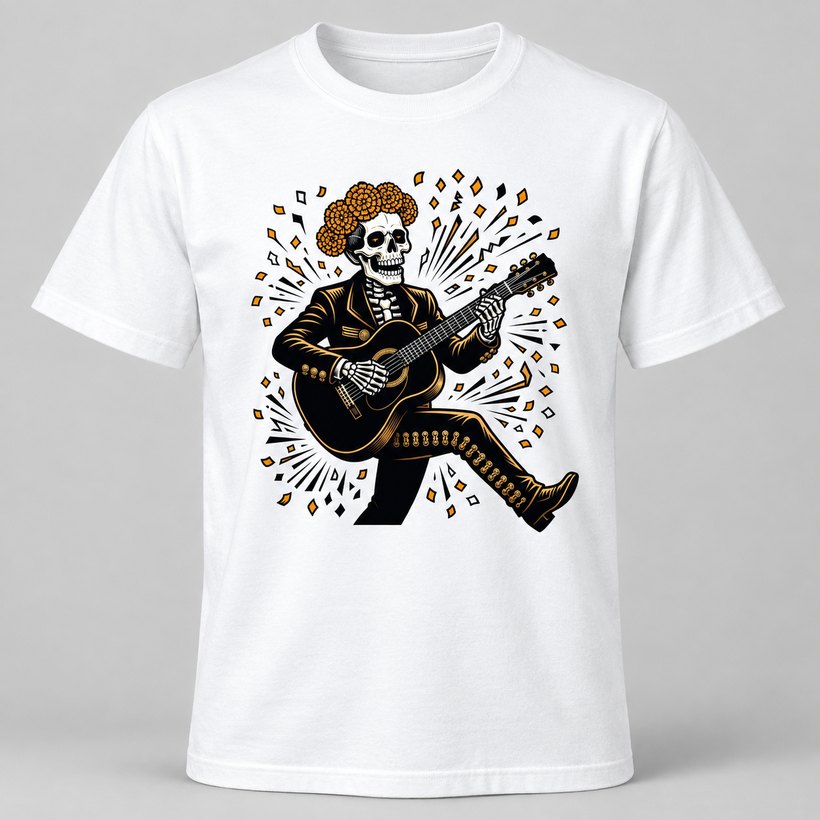
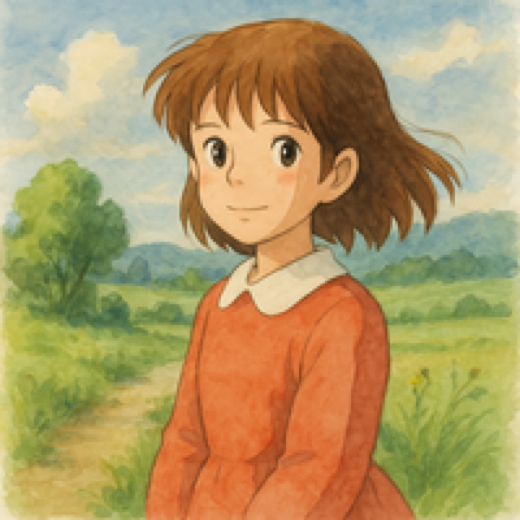
On CraftMyAI you describe an idea in a sentence, pick one of 150 art styles or 129 ready-made characters, and preview the result on the real garment before paying anything. A grandmother's village as a Madhubani painting, your dog as an anime hero, your cricket team as pixel art: each one is its own design, printed once, for one person. We walk through the design side in our AI t-shirt design generator guide.
The same logic is spreading beyond clothing. Craft images, personalised mugs, custom pens and prints for toy lovers all follow the idea-first pattern once design costs nothing and printing starts at one. CraftMyAI's mugs, water bottles and pens are coming soon, with artwork already composed for each shape: mugs will use a UV DTF wrap and pens a UV print. For how those methods compare with sublimation, read DTF vs sublimation printing.
When is bulk printing still the right choice?
Print on demand is not the answer to everything, and pretending otherwise would not help you. Bulk still earns its place in a few situations:
- Hundreds of identical pieces. If a marathon needs 500 matching tees with one logo, a screen printing run spreads its setup cost so thin that the unit price drops below any on-demand price.
- Very simple designs. A one-colour logo is cheap to screen print. The advantage of DTF is strongest on full-colour, detailed artwork like AI illustrations.
- Retail you already know will sell. A brand with years of sales data can forecast well enough to justify stock.
For everything else, including small batches, mixed sizes, gifts, family sets, fan art and anything that should feel personal, on-demand printing is usually cheaper overall because you never pay for a shirt that nobody wears. That is the heart of sustainable custom clothing: not a special fabric, just not making what is not needed.
How do custom team t-shirts work on demand?
Teams, clubs and offices are where the minimum order hurts most, because groups are rarely a round fifty and sizes are never even. With on-demand printing, a custom team t-shirt order is simple:
- Create one design, or give each member their own version with a name or number added as text.
- Add a size list for everyone, from kids 2 to 3 years up to adult XL.
- Place one order. Each shirt is DTF printed in the right size and delivered together.
A cricket team of eleven orders eleven. A family of five orders five. Nobody buys forty extra shirts to meet a minimum, and nobody wears the wrong size because the forecast guessed badly. If you want gift ideas built on the same idea, see AI personalised gift ideas.
Frequently asked questions
What is the difference between print on demand and bulk printing?
Bulk printing makes a large batch of identical items before anyone buys them, then stores and sells them. Print on demand makes each item only after it is ordered, so there is no stock to store and every piece can carry a different design.
Can I order a single custom t-shirt with no minimum order?
Yes. CraftMyAI prints on demand, so the minimum order is one piece. A single custom t-shirt costs the same per piece as fifty: Rs 449 for adult S to L, Rs 499 for XL and Rs 299 to Rs 399 for kids sizes.
Is print on demand more sustainable than bulk ordering?
Generally, yes. Because nothing is printed until it is sold, print on demand avoids unsold stock, markdowns and dumping. Industry estimates suggest roughly 10% to 30% of clothing produced is never sold, and made to order apparel sidesteps that waste.
When does bulk t-shirt printing still make sense?
Bulk printing makes sense when you need hundreds of identical pieces, such as 500 matching tees for a marathon or product launch, where a screen printing run lowers the per-unit cost. For small batches, unique designs or mixed sizes, print on demand is usually better.
How do custom team t-shirts work with print on demand?
You create one design, add a size list for everyone on the team, and place one order. Each tee is printed in the right size with DTF, so a club of twelve does not have to buy a minimum of fifty or guess the size split.