What Is Print on Demand? Inside a Studio, From Your Tap to Your Doorstep
Most explanations of print on demand stop at the definition. This one walks into the studio. We follow a single custom t-shirt from the moment you tap Order to the moment it lands at your door, and show what gets checked at every step.
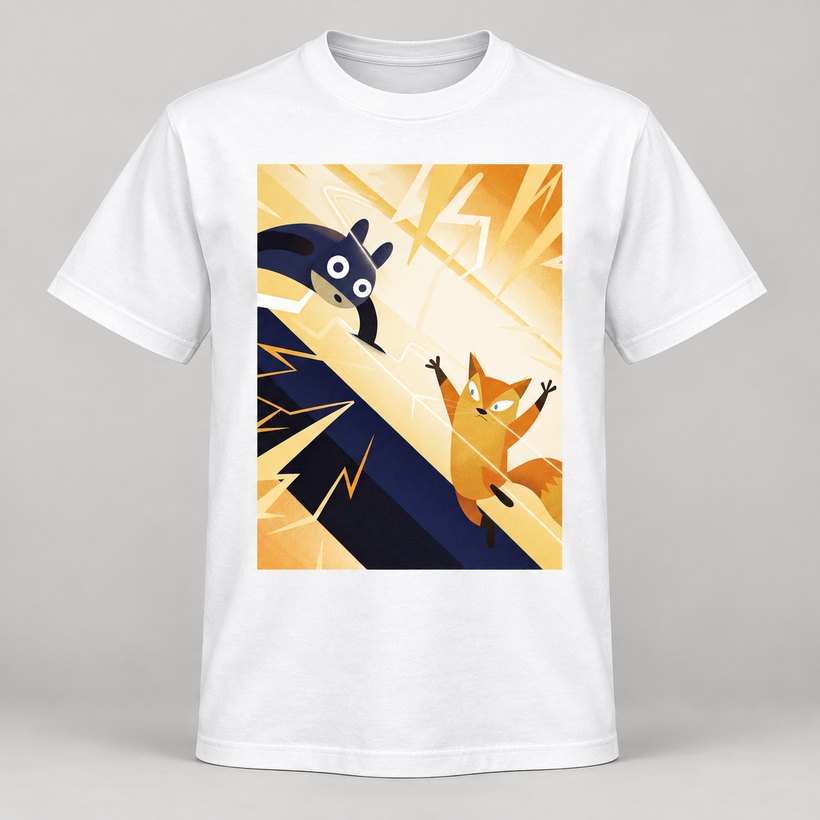
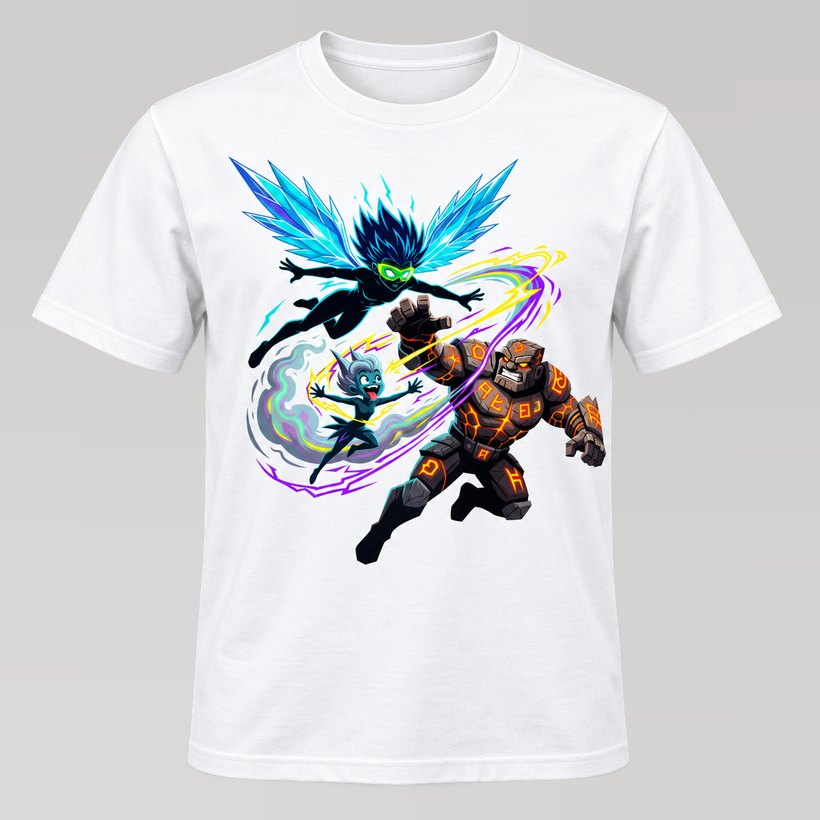
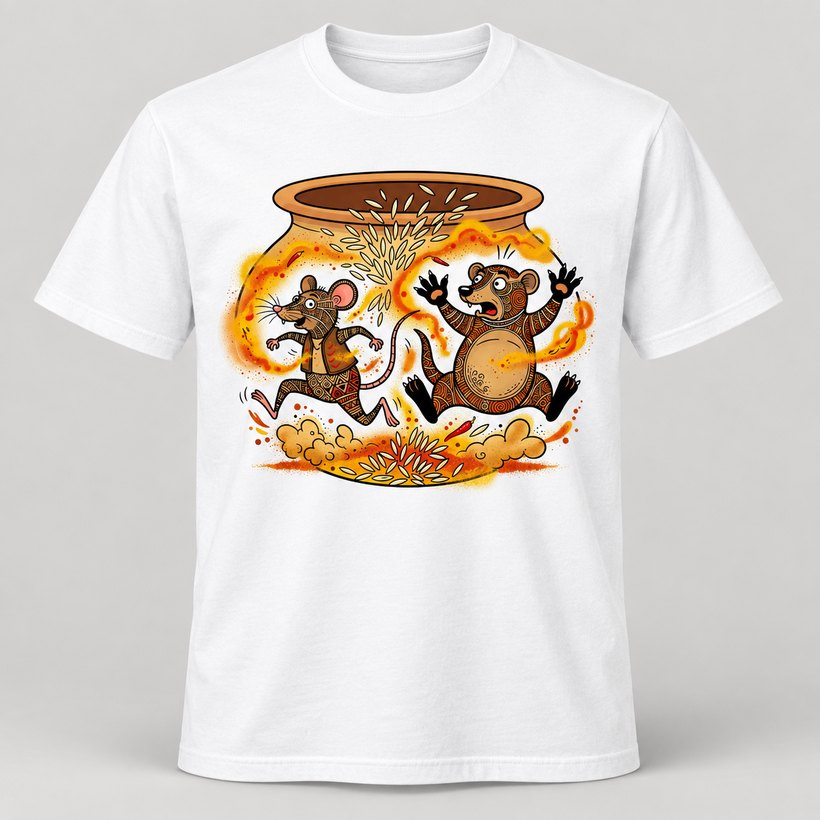
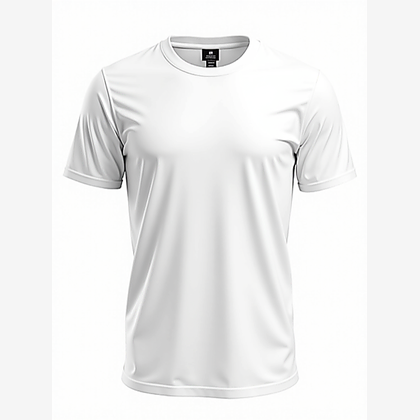
Print on demand means a product is printed only after someone orders it. The design waits as a file; when your order arrives, the studio prepares the artwork, prints a DTF transfer, heat presses it onto a blank t-shirt, checks it, packs it and ships it. No stock is made in advance and one piece is a normal order.
Key takeaways
- Print on demand replaces the warehouse with a file: nothing exists until it is ordered.
- Most of the quality work happens before printing, in file preparation and colour checks.
- A DTF gang sheet packs many customers' designs onto one film, which keeps a single t-shirt affordable.
- Heat, time and pressure decide whether a print lasts, so every press is followed by a peel and a check.
- A local studio can deliver in 24 hours to 2 days because the tee never travels across the country.
What is print on demand, in one paragraph?
Print on demand is a way of making things only when someone asks for them. A traditional shop prints hundreds of identical t-shirts, stores them and hopes they sell. A print on demand studio keeps blank garments and a printer, and prints each design only after it is ordered. That is why print on demand in India has grown so quickly for custom t-shirt printing: there is no stock to fund, no minimum order, and every piece can be different. If you want the business side of that argument, read print on demand vs bulk orders. The rest of this article is about the craft.
What happens after you tap Order?
Here is the full print on demand process at a local studio, the way CraftMyAI runs it. Nine steps, most of them quick, all of them checked.
Step 1: the order arrives
An order is more than a picture. It carries the design file, the garment style, the colour, the size and the print area. On CraftMyAI that means one of 23 colours, one of 11 sizes from 2 to 3 years up to XL, and one of three print areas: chest logo (17 x 17 cm), standard front (21 x 30 cm) or full front (30 x 42 cm). Every one of those choices changes what the printer does next.
Why does file preparation matter so much?
Step 2 is where most of the quality is won. A design that looks perfect on a phone can print badly if nobody prepares it. The studio checks three things:
- Size. The artwork is scaled to the exact print area. A full front print is laid out at 30 x 42 cm so it covers the chest without creeping into the armpits or the collar.
- Background. The design sits on a transparent background, so only the artwork prints. A stray white box around a character is the most common sign of an unprepared file.
- Colour against the garment. A navy character on a navy tee disappears. The design is checked against the chosen colour, which is also why the app previews it on the real garment before you pay.
Designs made in the app arrive already composed for printing: each of the 150 art styles and 129 characters is drawn as standalone artwork, not as a photo of a t-shirt. Uploaded photos and craft images get the same checks by hand.
What is a DTF gang sheet and why does it matter?
Step 3 is the one customers never see and the one that makes a single custom t-shirt affordable. DTF film comes on a roll, and at CraftMyAI that roll is 22.5 inches wide. Printing one chest logo in the middle of a long strip of film would waste most of it. So the studio builds a DTF gang sheet: designs from many different orders are packed side by side, like pieces of a puzzle, and printed in one run.
Gang sheets matter for three reasons. They cut film and ink waste, because the empty space between designs shrinks. They save printer time, because one run replaces many. And they let a studio keep one flat price whether you order one tee or fifty. The CraftMyAI admin tool builds these sheets automatically from the day's orders, then each design is cut apart after printing.
How is the design printed and pressed?
Step 4 is the DTF printing process itself. The printer lays the colour inks (cyan, magenta, yellow and black) onto clear PET film, then a layer of white ink on top. That white underbase is what keeps colours bright on a black or maroon tee. While the ink is still wet, a hot melt adhesive powder is spread across it and the loose powder is shaken off. The film is then cured with heat so the powder melts into a smooth glue layer.
Step 5 turns a transfer into a finished garment. Each design is cut from the gang sheet, positioned on the blank tee with guides for the chosen print area, and pressed with a heat press. Three settings decide how long the print lasts: temperature, time and pressure. Typical DTF presses run somewhere around 150 to 165 degrees Celsius for roughly 10 to 15 seconds, but the right numbers depend on the film and the fabric, so the studio follows the film maker's settings rather than guessing. The film is peeled, and many studios give a short second press to set the print into the weave.
What gets checked before it ships?
Step 6 is the quality check, and it is the reason print on demand quality can match or beat bulk printing: every single piece is looked at, not a sample from a batch.
| Step | What is checked | What goes wrong without it |
|---|---|---|
| Order | Style, colour, size and print area match what you chose | Right design, wrong tee |
| File prep | Size, transparent background, contrast with the garment colour | White boxes, tiny prints, invisible colours |
| Gang sheet | Every design is on the sheet at its true size | A design printed at the wrong scale |
| DTF print | Ink coverage, white layer, even powder | Dull colours, patchy grip |
| Heat press | Temperature, time, pressure, straight placement | Peeling or cracking after a few washes |
| Quality check | Placement, colour, edges firmly bonded | A crooked or lifting print reaches you |
| Pack and deliver | Right parcel, right address, status updated | Lost parcels and "where is my order" calls |
Steps 7 to 9 are the calm ones. The tee is folded and packed with its order label, then delivered locally, usually within 24 hours to 2 days because it is printed in Tamil Nadu rather than shipped across the country. Throughout, the app shows print status, dispatch and delivery, so you never have to ring anyone to ask. You pay by UPI or cash on delivery.
Why a one-piece order costs the same per tee as fifty. In print on demand the cost comes from the blank, the ink and a share of a gang sheet, not from a screen or a setup fee. So a men's or women's tee is Rs 449 for S to L and Rs 499 for XL, and children's tees are Rs 299 to Rs 399, whether you order one or a team's worth. Designing is free.
How will mugs and pens work?
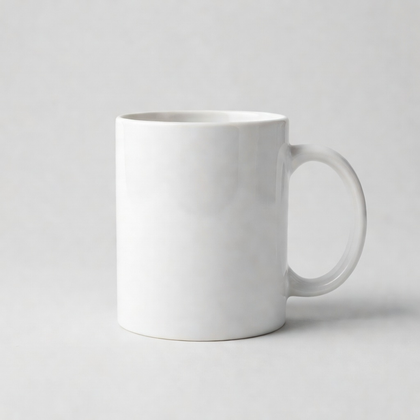
The same idea, print only what is ordered, works for hard goods, but the printing changes. Sublimation mugs use dye that turns to gas under heat and bonds into a special coating on the mug. Uncoated mugs, insulated water bottles and other hard surfaces can be finished with a UV DTF wrap, a printed sticker that needs no heat press. Custom pens are usually printed directly with UV ink along a small barrel strip. Toys follow similar rules in the wider industry: polyester plush is often sublimated. Our DTF vs sublimation guide explains the difference in detail.
At CraftMyAI, t-shirts print today, while mugs, water bottles and pens are coming soon. The artwork for each shape is already being composed so that when they open, the studio process above simply gains a new press at the end.
Frequently asked questions
What is print on demand?
Print on demand is a way of making products only after someone orders them. Nothing is printed in advance: the design is stored as a file, and when an order arrives the studio prints that one item on a blank product and ships it. There is no stock and no minimum order.
How long does print on demand take?
Printing itself takes minutes, but the full process of preparing the file, printing the DTF transfer, pressing, checking and packing usually takes a day. CraftMyAI prints locally in Tamil Nadu, so most custom t-shirts arrive within 24 hours to 2 days.
What is a DTF gang sheet?
A DTF gang sheet is a length of transfer film with many designs packed onto it side by side. Instead of printing one design per sheet, the studio nests designs from several orders onto one 22.5 inch wide roll, prints them together and cuts them apart, which saves film, ink and time.
Is print on demand quality as good as bulk printing?
Yes, when the studio uses good blanks and prints carefully. A single DTF print on 240 GSM combed cotton gets the same inks, heat press and checks as a bulk job. The difference is that every piece can carry a different design.
Can print on demand make mugs and pens too?
Yes, with different methods. Mugs are usually printed with sublimation or wrapped with UV DTF, and pens with direct UV printing. CraftMyAI prints t-shirts today, and mugs, water bottles and pens are coming soon.