Cinematic AI T-Shirt Designs: Photorealistic Portraits and Movie-Poster Tees from a Single Prompt
Some ideas want to be a cartoon. Others want to be a film still: dramatic light, real depth, a hero framed against the sky. Here is how to write a prompt that comes back looking like a movie poster, and how to get it printed on a tee so it still looks cinematic from across the room.
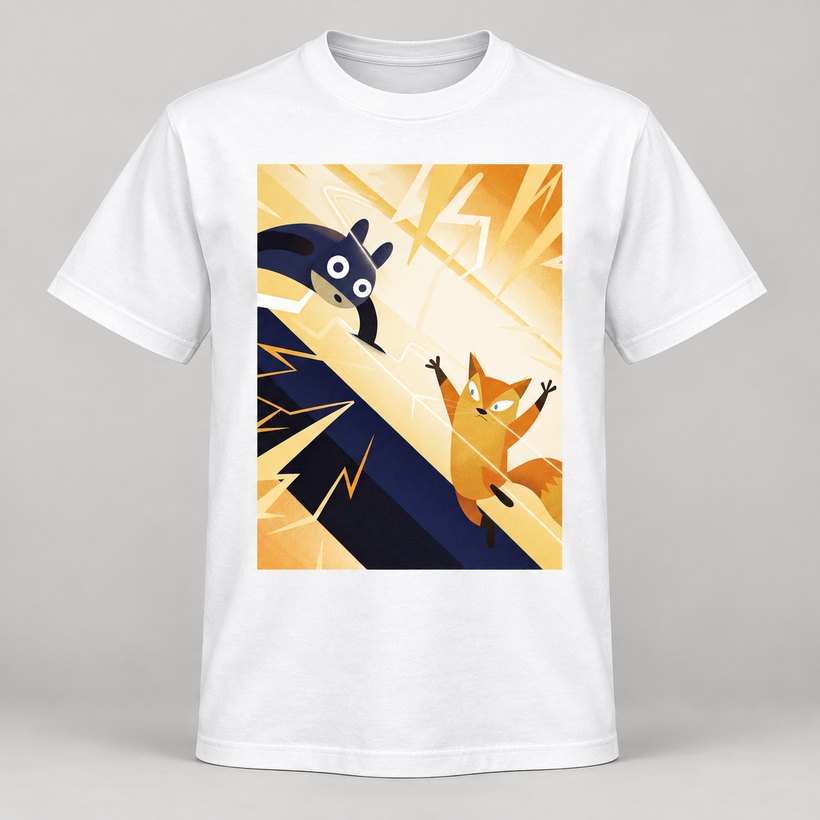
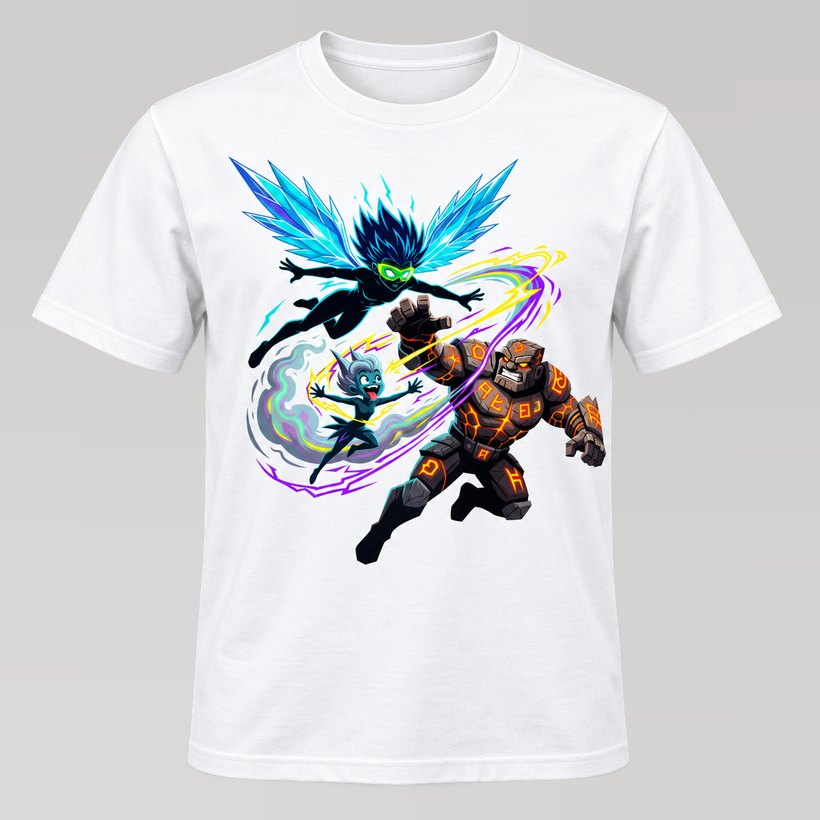
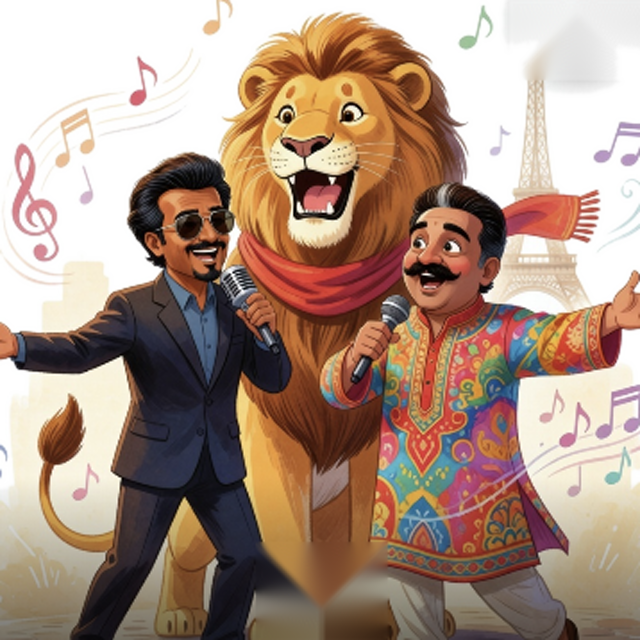
To make a cinematic t-shirt design, describe your subject with a shot type, a light source, a mood and a backdrop, then choose the photorealistic cinematic look instead of an art style. Print it on the 30 x 42 cm full front so the scene fills the frame like a poster. DTF printing keeps the gradients and detail sharp.
Key takeaways
- "Cinematic" comes from four things: one clear light source, depth, deliberate framing and a colour grade.
- A cinematic prompt adds a shot type and lighting to the usual subject, mood and setting.
- Poster tees belong on the full front. The scene prints as one flat panel, edge to edge.
- DTF lays a white underbase first, so a photoreal scene stays bright on black, navy or maroon tees.
- Fan tees should be original homage: no real celebrity faces and no studio logos.
What makes a t-shirt design look cinematic?
Most custom t-shirts carry a graphic: a character or a logo floating on the fabric. A cinematic design is different. It is a whole scene, composed the way a cinematographer frames a shot, so the tee reads like a still from a film or a movie poster. Four ingredients do the work:
- A light source you can point to. Golden-hour sun, a neon sign, stage spotlights or lightning. Light that comes from somewhere gives shape and drama.
- Depth. Something close, something in the middle and something far away. Haze, rain or dust between them makes the distance visible.
- Framing. A low-angle hero shot makes the subject feel powerful; a wide shot makes the world feel big; a close-up makes it personal.
- A colour grade. Teal and orange for blockbusters, warm amber for nostalgia, cold blue for thrillers. One mood across the whole frame.
On CraftMyAI you can skip the 150 art styles entirely and ask for a cinematic, photorealistic render. Pick several of the 129 ready-made characters and they all appear together in one story-driven scene, lit and framed as a single shot rather than pasted side by side.
How do you write a cinematic prompt?
A normal t-shirt prompt names a subject, an action, a mood and a setting. A cinematic prompt adds the language of the camera. It still fits in one sentence.
| Element | Try | What it does on the tee |
|---|---|---|
| Shot type | Low-angle hero shot, wide establishing shot, close-up portrait | Decides whether the subject feels powerful, epic or intimate |
| Lighting | Golden hour, rim light, neon glow, stage spotlight, stormy lightning | Gives shape and a clear focal point that reads from a distance |
| Mood | Triumphant, mysterious, nostalgic, joyful, intense | Sets the colour grade and the expressions |
| Backdrop | Misty hills, a rain-soaked street, a stadium at night, a temple festival | Adds depth without cluttering the subject |
Keep the subject singular and strong, even in a busy scene. When the prompt asks for several characters, name what they are doing together, such as "three friends running from a monsoon storm, laughing". A shared action is what makes it one scene instead of three portraits.
Which cinematic tees work best?
Cinematic designs shine when the tee is about a moment rather than a mascot. The ideas that come up again and again in our studio:
- First day first show fan tees. A poster-style homage for a big release, made the week the film opens, with the day and your group name added as a title line.
- Family portrait posters. Your family as the heroes of their own adventure film, lit like a blockbuster one-sheet.
- Pet portraits. A dog in a slow-motion leap or a cat lit like a noir detective. Photoreal pets make some of the most loved custom portrait t-shirts.
- Sports moments. A last-ball six under stadium floodlights, or a local football team's winning goal, with the date as the title.
- Trip and festival scenes. A temple festival at dusk, a hill station in the mist, a beach sunrise: the trip as a film still.
If you already have the photo, you can upload your own photo or drawing and print it on a premium tee. Or describe the moment and let the AI paint a cinematic version of it, which often flatters a blurry phone shot. For looks that are drawn rather than filmed, our AI t-shirt design generator guide covers prompts for the 150 art styles.
Which print area suits a poster tee?
A graphic can shrink to a chest badge. A scene cannot: shrink a cinematic composition and the depth, the light and the faces disappear. That is why poster tees belong on the biggest print area.
On the full front, 30 x 42 cm, the scene is composed as a flat print panel that fills the frame edge to edge: no die-cut sticker outline, no white border, no drop shadow floating on the fabric. It looks printed into the shirt, the way a poster is printed onto paper. The standard front, 21 x 30 cm, works for a smaller poster or a close-up portrait, and suits kids' sizes. Add the title, a name or a release date with the text tool rather than asking the AI to paint it, so the letters print crisp.
How does a photoreal design print on dark and light tees?
Photorealistic art is the hardest test for a print method: soft gradients, skin tones, glowing highlights and deep shadows all in one frame. CraftMyAI prints every tee with DTF (direct to film) onto 240 GSM combed cotton, and DTF suits cinematic work for one reason in particular: the white underbase.
- On a dark tee (black, navy, maroon, charcoal), DTF lays a white layer under the colours, so a sunset still glows instead of sinking into the fabric. Night scenes and neon lighting look especially striking on black.
- On a light tee (white, beige, sky blue), the scene reads like a printed poster. Bright, airy grades such as golden hour and beach mornings suit these.
- Match the grade to the shirt. A cold, blue thriller scene can vanish on navy, and a pale misty scene can look washed out on white. Preview it on your chosen colour among the 23 we stock before you order.
Sublimation, the other method people ask about, gives beautiful photographic prints on white polyester and on coated mugs, but it cannot print on cotton or dark fabric. Our DTF vs sublimation guide explains when each one wins.
How do you make a fan tee without copying anyone?
Fan tees are some of the most fun cinematic designs, and they come with one rule: make it an original homage, not a copy. Real people's faces and studio logos belong to them, and a design that uses them is not yours to print.
Do: describe the feel of the film, such as the era, the costume colours, the kind of hero and the setting, and let the AI create an original character in that spirit. Add your own title line, your fan club's name and the release date.
Avoid: naming a real actor to get their likeness, and asking for a studio or film logo. A creative homage feels more personal anyway, because nobody else in the theatre will be wearing the same one.
The same thinking applies to the 129 ready-made characters in the app: they are designed for CraftMyAI, so a scene built from them is safe to print. A general chatbot will happily imitate a famous face; a purpose-built design tool steers you away from it. We compare the two approaches in Design app vs frontier AI models.
Can a cinematic design go on mugs and pens too?
Cinematic scenes will travel beyond t-shirts soon. Custom mugs, water bottles and pens are coming to CraftMyAI, with artwork composed for each shape: a mug wrap is drawn wide so the scene carries round the handle instead of being cut by it, and a pen barrel needs bold, simple shapes at 4 cm, so a poster scene becomes a single striking silhouette. Many coated mugs are printed with sublimation, which suits photographic images well. Crafters also use cinematic scenes as craft images for posters and scrapbooks, and a child's favourite toy can star as the hero of its own film poster tee.
| Size | Price per tee |
|---|---|
| Men and women, S to L | Rs 449 |
| Men and women, XL | Rs 499 |
| Children, 2 to 3 years up to 14 to 15 years | Rs 299 to Rs 399 |
| Designing, regenerating and previewing | Free |
The price is the same for a chest logo or a full-front poster, and the minimum order is one piece, delivered in 24 hours to 2 days locally in Tamil Nadu.
Frequently asked questions
What is a cinematic t-shirt design?
A cinematic t-shirt design looks like a still from a film or a movie poster. It has a clear light source, depth between foreground and background, deliberate framing and a colour grade that sets the mood, printed as one full scene rather than a cut-out graphic.
Can AI make a photorealistic t-shirt print?
Yes. On CraftMyAI you can skip the art styles for a cinematic, photorealistic render of your idea. It is composed as a flat print panel that fills the print area, and DTF printing reproduces its gradients and fine detail on cotton.
Which print size is best for a movie-poster t-shirt?
The full front, 30 x 42 cm, is best for a poster tee. It gives the scene room to breathe and lets it run edge to edge. A standard front of 21 x 30 cm suits a smaller poster, while the 17 x 17 cm chest logo is too small for a detailed scene.
Can I make a fan t-shirt of my favourite film star?
Make an original fan-art homage instead of copying a real person or a studio logo. Describe the mood, the costume colours and the kind of scene you love, add your own title line, and the design stays yours without using anyone's likeness or trademark.
Can I turn my own photo into a t-shirt?
Yes. You can upload your own photo or drawing in CraftMyAI and print it on a premium tee, or describe the moment in words and let the AI paint a cinematic version of it.