Launch a Clothing Brand Without Inventory: Build the Brand First, Print Only What Sells
Most first-time labels spend their savings on boxes of stock and have nothing left for the part that actually sells: the brand. Print on demand flips the order. Here is a brand-first playbook for starting a clothing brand in India with zero inventory.
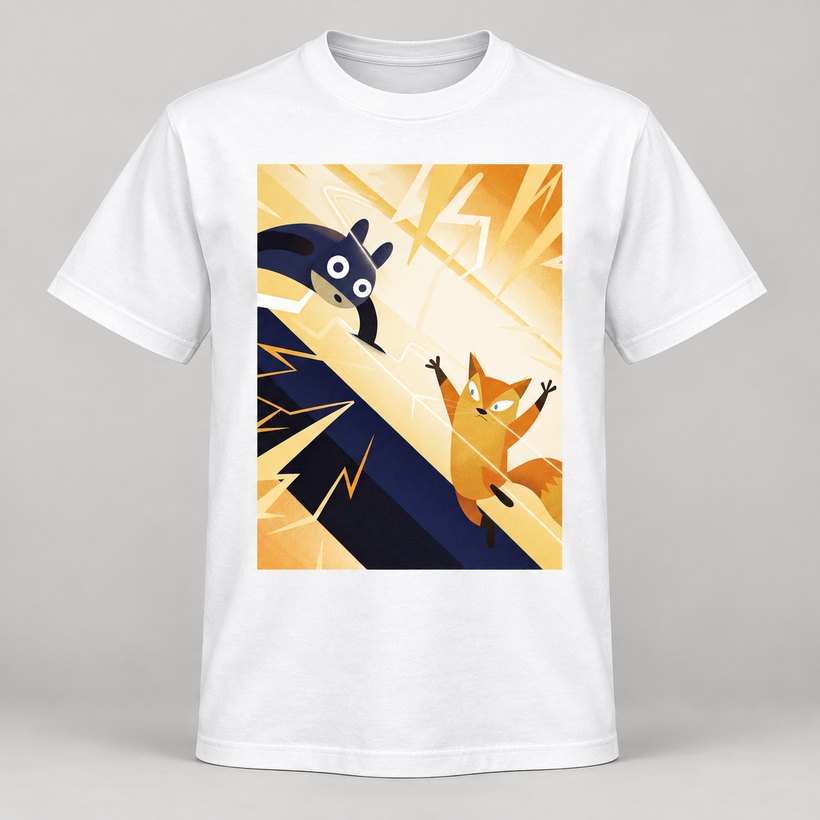
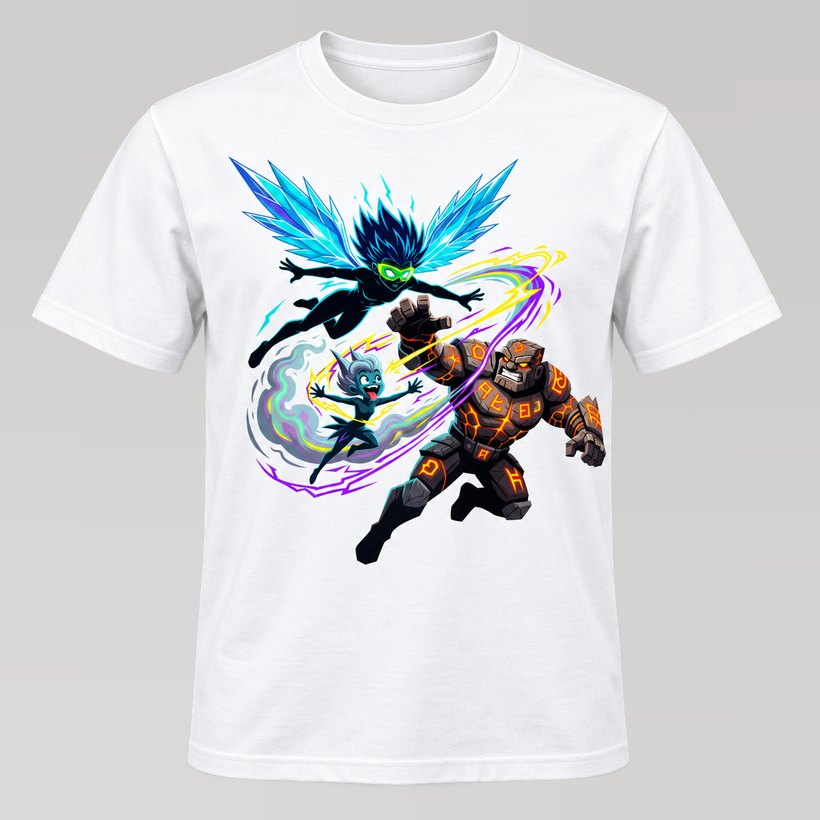
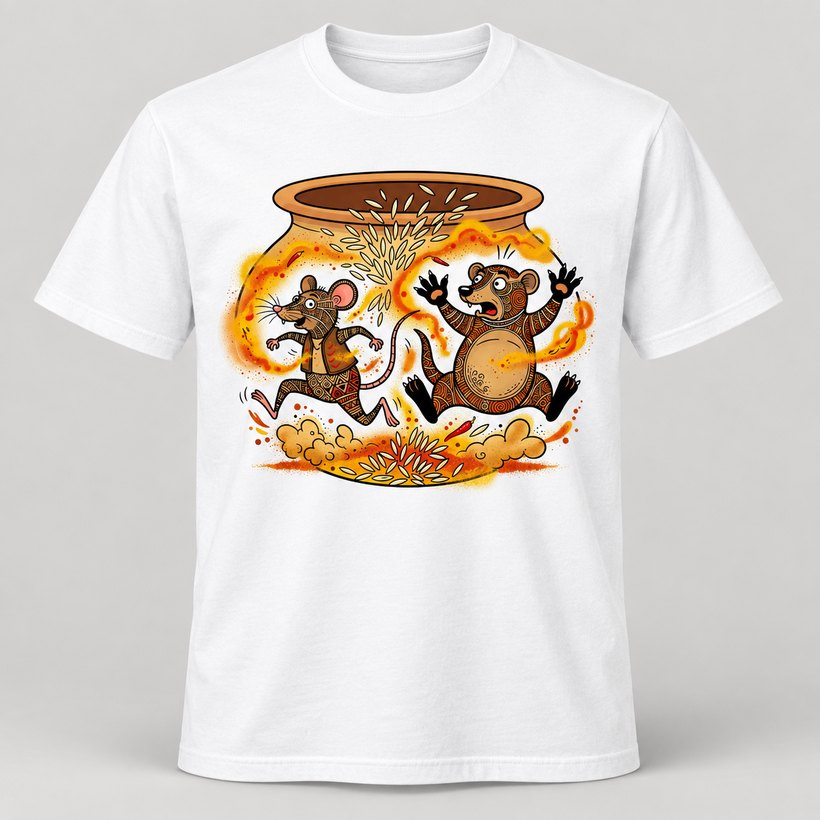
To launch a clothing brand without inventory, build the brand before the stock: pick a point of view, a name you can own and a consistent design language, then release a small capsule through a waitlist. With print on demand, every t-shirt is printed after it is ordered, so you only ever pay for what sells.
Key takeaways
- Without stock to fund, your real investment is the brand: point of view, name and design language.
- Two or three art styles, one mascot and a fixed colour palette make a collection look like one label.
- A capsule of about six designs is enough to launch; numbered drops give people a reason to return.
- A waitlist tells you who wants the drop before you announce it.
- Designs that do not sell cost nothing to retire, because they were never printed in bulk.
What should my clothing brand stand for?
Every lasting streetwear brand in India started as a point of view before it was a product. A point of view is simply the answer to "who is this for, and what do they say to each other?" It narrows your designs so much that they almost write themselves.
The strongest points of view are specific. Some that suit a zero-inventory label:
- A language. Tamil wordplay, a cinema dialogue twisted into a one-liner, a phrase only your city understands. Language-led t-shirts are hard to copy because the joke only lands with the right crowd.
- A place. Nellai pride, halwa and Thamirabarani references, a neighbourhood's nickname. Place brands turn locals into ambassadors and travellers into customers.
- A crew. A gaming clan, a college club, a running group, a cricket fandom. Crews already share inside jokes; you give them something to wear.
Write your point of view in one sentence and pin it above your desk. Every design that does not fit that sentence waits for a different brand.
How do I name a brand and protect it?
A good brand name is short, easy to say in both English and your audience's language, and not already owned. Before you fall in love with one, search the trademark records on the IP India website for the same or similar names in the clothing class. Also check that the Instagram handle and a web domain are free, since that is where most people will meet you first.
Filing a trademark is a legal step, so talk to a trademark professional about the right class and timing, especially before you spend money on labels, packaging or signage. The one habit worth keeping from day one: use the name consistently everywhere, exactly the same spelling and style.
How do I build a design language with AI?
A design language is the set of rules that makes ten different t-shirts look like one brand. AI t-shirt design makes it easy to produce a lot of artwork quickly, which is exactly why you need rules. Without them, a feed of AI designs looks like a random gallery rather than a label.
On CraftMyAI, a design language comes down to four decisions you make once:
| Decision | Rule of thumb | How to do it on CraftMyAI |
|---|---|---|
| Art styles | Two or three, never more | Pick from the 150 art styles, for example one flat vector style for logos plus one illustration style for statement pieces |
| Mascot | One recurring character | Choose one of the 129 ready-made characters or describe your own and keep the description identical every time |
| Colour palette | Three to five garment colours | Choose from the 23 stocked colours, such as black, mustard, olive and grey melange for an earthy streetwear look |
| Type | One font treatment for names and slogans | Add words with the text tool rather than inside the artwork, so lettering stays sharp and consistent |
Because designing and previewing are free, test your language before you launch: put the same mascot into both of your chosen styles, preview each on your palette colours in 3D, and keep only the combinations that look like siblings. Our guide on why a design app beats a blank AI prompt box explains why fixed styles and characters stay consistent where freeform prompting drifts.
How big should the first collection be?
Around six designs. A capsule that small is easy to photograph, easy to talk about one piece at a time, and big enough that people can find "their" design. Aim for a spread rather than six variations of one idea:
- One logo piece as a 17 x 17 cm chest print, the quiet everyday tee.
- Two statement pieces as full-front 30 x 42 cm prints, the ones that get photographed.
- Two slogan pieces built around your language or place.
- One mascot piece that introduces the character you will reuse.
Spread them across garment styles too. An oversized tee for the statement print, a half sleeve tee for the slogans, and a hoodie or acid wash tee for the piece that feels most premium. Number the capsule as Drop 01 from day one; it quietly tells people there will be a Drop 02.
How do I launch without stock?
Launching a clothing brand without inventory means your launch is about attention, not about clearing boxes. Three steps work well together:
- Tell the story before the product. Share the point of view, the mascot's first sketch, the palette. People follow a brand's making-of long before they buy.
- Open a waitlist. One field for an email or phone number is enough. A waitlist gives you a list of people who asked to hear from you, which is worth more than any number of likes. CraftMyAI launched its own app the same way.
- Drop to the list first. Give waitlisted people the first look and a short window before posting publicly. Early buyers become your first photos and reviews.
Because every piece is made to order and the minimum order is one, there is no warehouse to fill before launch day. For the practical side of taking orders and payments, see our guide on how to sell t-shirts online without stock, and for the paperwork and costs, starting a t-shirt business in India.
Limited drops or evergreen designs?
Both, for different jobs. Limited drop t-shirts create urgency and give you a calendar of reasons to post. Evergreen designs are your logo and signature pieces that stay available and quietly bring in steady orders.
| Limited drop | Evergreen | |
|---|---|---|
| Purpose | Excitement, news, a reason to follow | Recognition and steady orders |
| Typical design | Festival, match day, a moment in the city | Logo, mascot, signature slogan |
| Availability | A fixed window, then retired | Always open |
| Stock risk with print on demand | None, nothing printed until ordered | None |
The zero-inventory model is what makes limited drops honest. When a window closes, you simply stop taking orders. There is no leftover pile to discount, so "limited" really means limited.
Let the numbers retire designs for you
After each drop, look at which designs, colours and sizes were ordered. Keep the winners as evergreen, retire the rest, and feed what you learned into the next capsule. A design that sold nothing cost you only the time to make it, because it was never printed in bulk. That feedback loop is the quiet advantage of print on demand in India: you learn from every order without betting on a forecast.
When should I add mugs, pens and more?
Once your t-shirts have a following, merchandise extends the brand into everyday objects. Custom mugs are usually made with sublimation printing on a coated mug or finished with UV DTF, while custom pens use UV printing on a small barrel area, so bold, simple marks work best. Our DTF vs sublimation guide explains which method suits each product.
Your design language carries over directly. Your mascot becomes a mug wrap, your logo mark becomes a pen emblem, and your illustration style turns into craft images for stickers. Toys and collectibles are a common source of merch inspiration, even if you start with apparel. On CraftMyAI, mugs, water bottles and pens are coming soon, with artwork already composed for each shape.
What CraftMyAI is, and is not. CraftMyAI is a design-and-print app: you design for free, preview on the real garment and order pieces at flat per-size prices (Rs 449 for S to L, Rs 499 for XL, Rs 299 to Rs 399 for kids), printed with DTF on 240 GSM combed cotton. It is a practical way to prototype a brand, test designs and make small runs, one piece at a time.
Frequently asked questions
Can I start a clothing brand in India without inventory?
Yes. With print on demand, each t-shirt is printed only after someone orders it, so you never pay for stock up front. What you invest in instead is the brand: a point of view, a name, a consistent design language and the audience you build before launch.
What makes a clothing brand different from just selling t-shirts?
A brand has a point of view that repeats across every piece. The same art styles, colours, mascot and tone of voice make a stranger recognise your t-shirt before they see the name. Selling t-shirts is a transaction; a brand is a reason to come back.
How many designs should my first collection have?
Around six is a good first capsule. It is enough to show a clear design language and give people a choice, and small enough that each design gets proper attention in your launch content.
Do I need to register a trademark before launching?
You should at least search the IP India trademark records before you commit to a name, so you do not build on a name someone else owns. Filing is worth discussing with a trademark professional, especially before you spend on packaging or signage.
Can AI help me design a clothing brand?
Yes, if you use it with discipline. On CraftMyAI you can pick two or three of the 150 art styles, keep one recurring character, add your own text and preview everything on the real garment colours for free, so the whole collection looks like it came from one studio.